Emotion Cards

Build Emotional Intelligence
Recognise and name emotions: Helps children understand a wide range of feelings by connecting facial expressions with emotional vocabulary.
Encourage self-expression: Supports children to communicate how they feel, reducing frustration and improving communication.
Build empathy and social understanding: Teaches children to identify emotions in others—a key part of emotional intelligence.
Ideal for all children: Especially helpful for neurodivergent children who benefit from visual and structured supports.
Matching Pairs for Fun Games
At Dealing in Feelings, we believe that learning about emotions should be as fun as it is insightful!
That’s why our Emotion Cards for kids can also be used for fun card games.
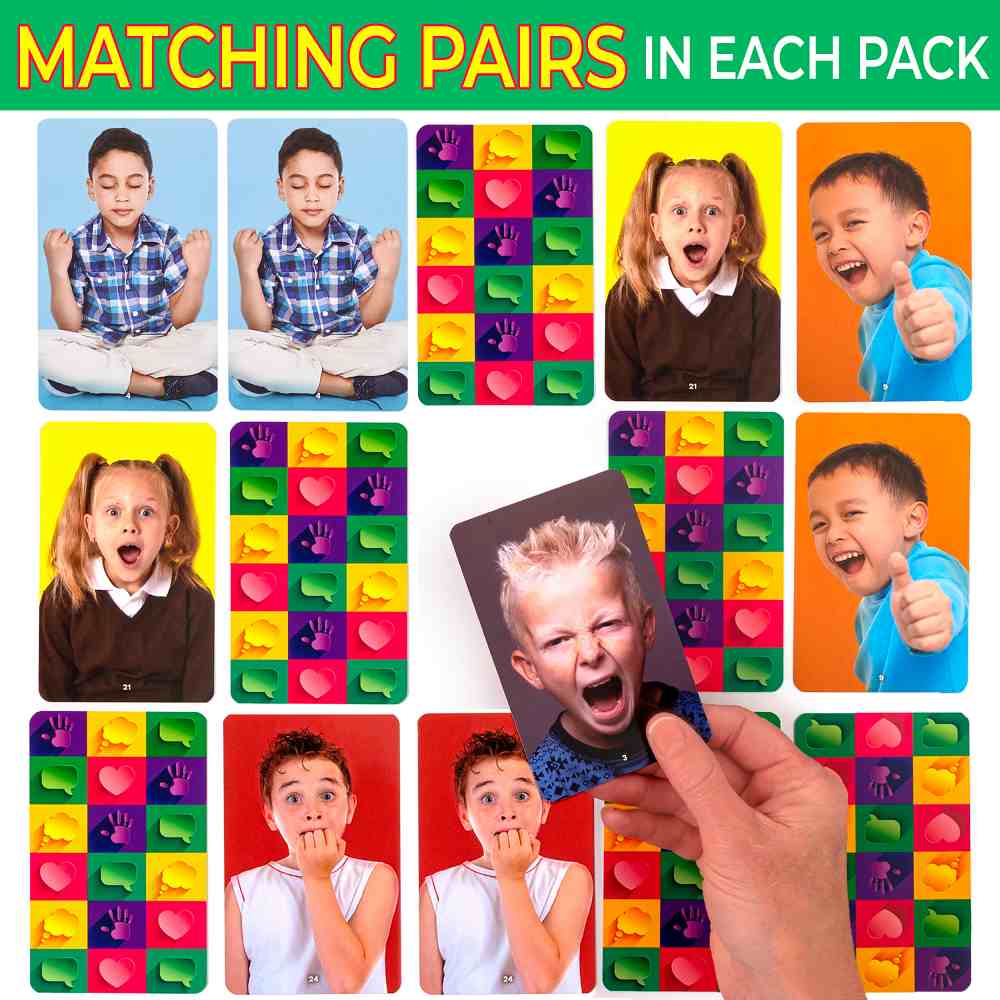
Each card has a matched pair, making the pack perfect for fun card games such as Memory, Go Fish and Emotions Bingo.
Play matching games to help children visually connect facial expressions with different feelings.
Use the cards to create your own version of Emotions Bingo, a fun group activity that strengthens emotional recognition and vocabulary.
Great for memory games, storytelling prompts, role-play, and classroom activities.
By incorporating fun card games into emotional learning, children become more adept at identifying emotions and develop vital social and cognitive skills.
Realistic Emotion Cards
Professionally created by a Psychologist
Our realistic emotion cards for kids have been professionally designed to help children understand and talk about feelings.
Designed by an Educational and Developmental Psychologist, the Dealing in Feelings Emotion Cards help children recognise, understand, and express their emotions confidently.
Whether you’re a parent, teacher, or therapist, these cards are a practical and engaging resource for building emotional intelligence in children.
Recognise Facial Expressions
Psychologists, School Counsellors, Speech Pathologists, and OT’s will find these cards a great resource. Teachers will find them perfect for social and emotional learning.
Use them in the classroom for SEL activities and for developing emotional literacy. Use the emotions flashcards to recognise facial expressions.
Parents can use them at home to help preschoolers and toddlers to name their feelings.
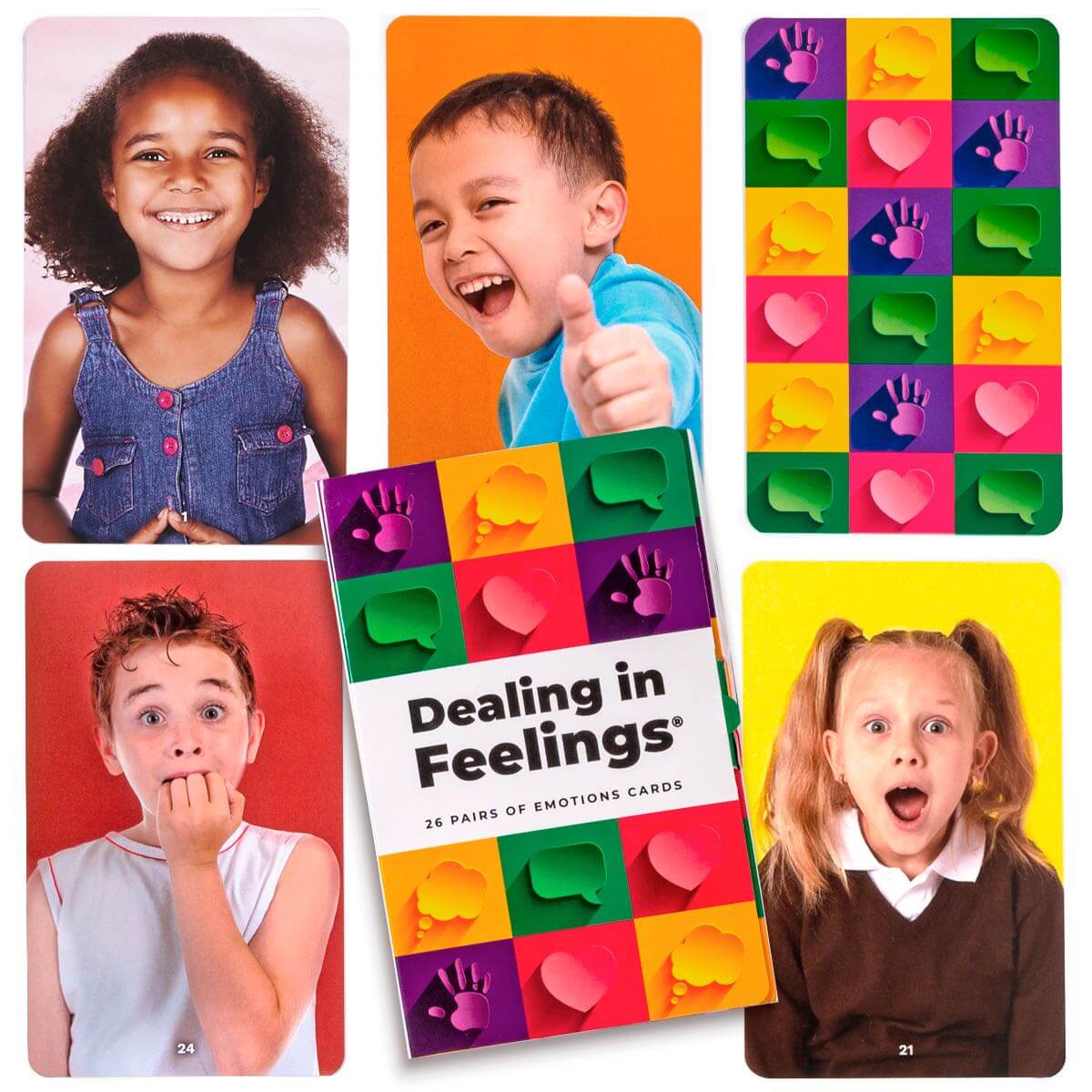
These beautiful cards depict children of different ages and diverse cultural backgrounds.
Easy to use, the cards come with an Emotions Word key card so no more guessing what the feeling shown on the card is!
26 different feelings depicted.