

Anger Management Cards for Kids

Social Emotional Learning
Beyond just anger control, COOL TOOLS use strategies including resting, moving, sensing, expressing and thinking. Colour-coded on the back of each card, they are ideal for therapy sessions. A must-have tool for school counsellors and therapists eager to build kids’ social-emotional learning.
Perfect for parents, therapists, educators, and caregivers, Cool Tools stands as one of the most effective anger management cards for kids. With each card, you’re not just managing anger; you’re equipping children with self-regulation skills that will benefit them for a lifetime. Suitable for ages 6+ years.

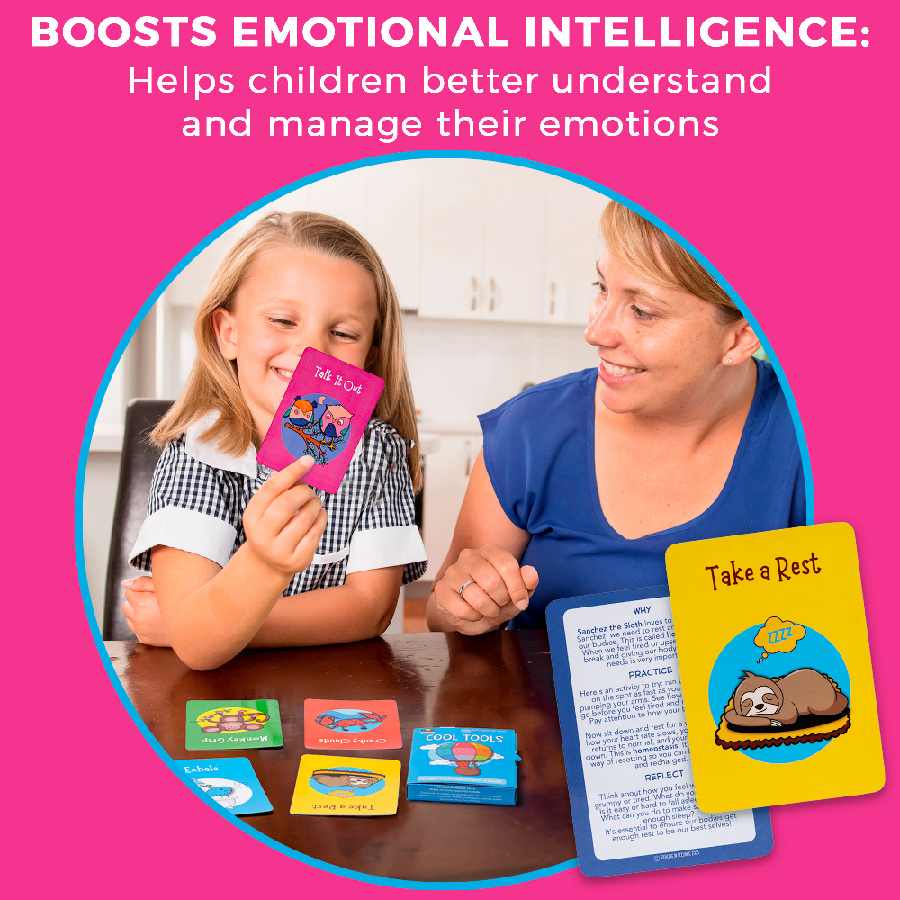
Every child experiences anger, but not every child has the skills to manage such strong emotions. Introducing Cool Tools our animal-themed collection of anger management cards for kids designed to build self-regulation skills.
Recognising that anger management for children is more than just calming down, Cool Tools provides teachable activities using proven emotional regulation strategies.
Teach kids practical strategies for coping with big feelings in a healthy way. Ideal for home, therapy and classrooms.
Teach Self-Regulation Skills
With a unique blend of therapeutic techniques, our anger management cards for kids transform self-regulation strategies into a fun and interactive experience. Our cards foster genuine learning and skill mastery.
Backed by insights from neuroscience, mindfulness, sensory-motor, and cognitive behavioural approaches, teachers, therapists and parents can trust their educational efficacy.
The Cool Tools anger management cards for kids feature delightful animal characters such as Walter the Whale, Chloe the Cat and Minty the Monkey. Each card offers a practice activity that’s both engaging and educational for kids.

Therapy on a Card
Cool Tools: Anger Management Cards for Kids – A Therapy Session in Every Card
If you’re a therapist working with children, Cool Tools is about to become your new favourite resource. These colourful, engaging anger management cards for kids are designed by an Educational Psychologist to make teaching self-regulation simple, practical, and fun.
What makes Cool Tools special? Each card is like a mini therapy session. Every one includes a specific anger management strategy—taught through a friendly animal character—plus an interactive activity to do with the child, and a reflection prompt to deepen their understanding. It’s everything you need for a meaningful therapy session, right at your fingertips.
Whether you’re working on breathing techniques, body awareness, or problem-solving, the cards guide the conversation, provide hands-on engagement, and help kids connect the skills to real-life situations.
Therapists love how versatile and easy to use Cool Tools are—ideal for one-on-one sessions, small groups, or even to send home with families. And kids love the bright illustrations, playful characters, and the empowering feeling of learning how to manage big feelings like anger.
If you’re looking for anger management cards for kids that actually support the therapeutic process—Cool Tools delivers, one card at a time.
For Parents
Does your child struggle with managing their anger and expressing their emotions effectively? Are you searching for a fun and engaging way to teach kids anger management skills?
Say goodbye to temper tantrums and emotional meltdowns. Cool Tools provides effective techniques that you can share with your child that build pathways to emotional intelligence and enhanced self-awareness. Using neuroscience, mindfulness, sensory-motor, and cognitive behavioural strategies that are conveniently colour-coded for easy reference.
To read more about helping children with their self-regulation skills take a look at our Blog post What’s the Difference between co-regulation and self-regulation in Kids.