


Emotion Cards for Kids
$31.81
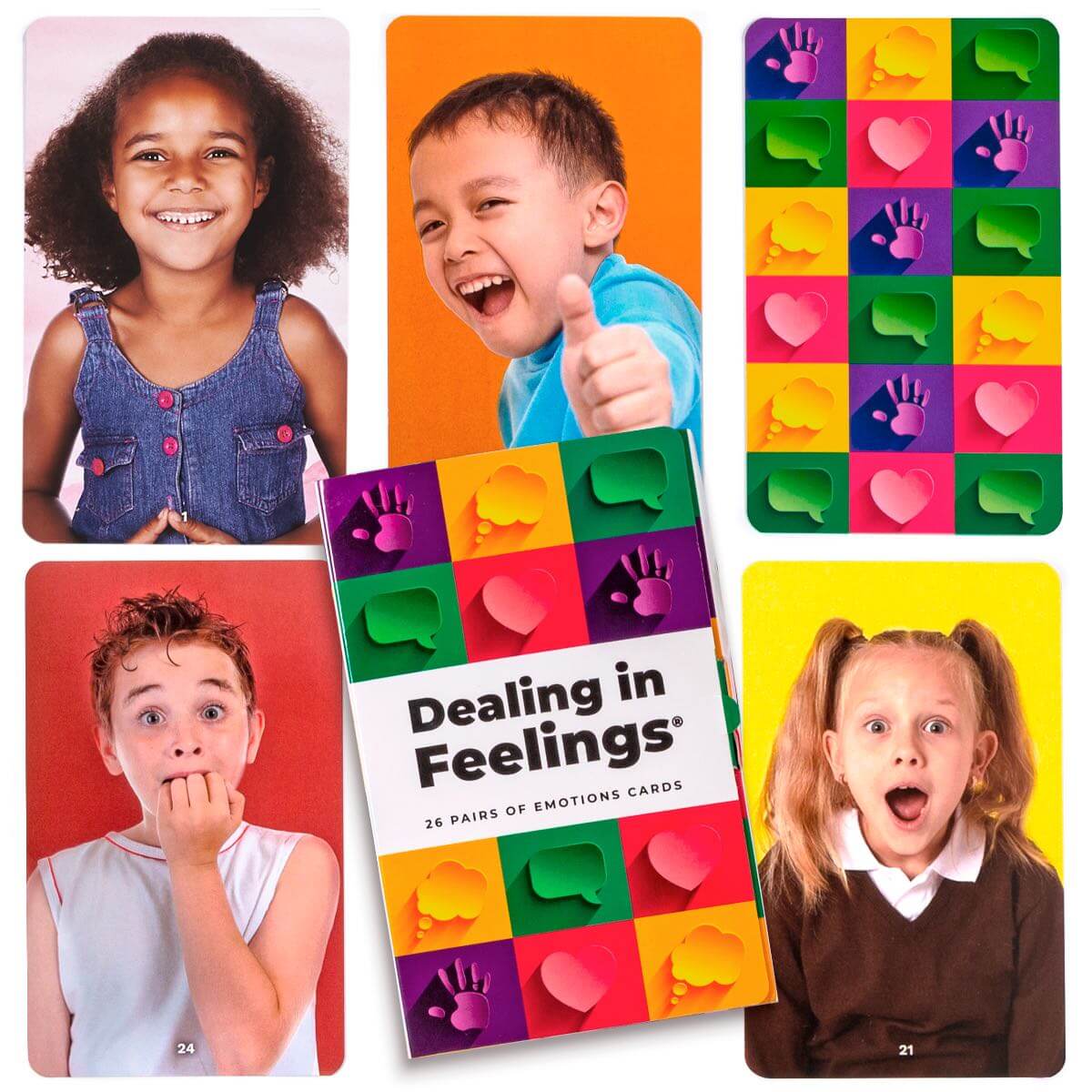
Help kids recognise and talk about feelings with Dealing in Feelings Emotion Cards. Featuring 26 diverse emotions shown in full-colour photos of real children, these cards are designed by an Educational Psychologist to support emotional learning and communication. Perfect for families, teachers, therapists, and counsellors. Includes two sets for matching and fun card games like Memory, Go Fish, and Emotions Bingo.
Teach kids to understand feelings with realistic photo cards
The Dealing in Feelings Emotion Cards are a psychologist-designed resource to help children recognise, name, and share their emotions. With 26 emotions depicted through clear, full-colour photographs of diverse children, these cards make emotional learning engaging and relatable.
What’s Included
2 sets of 26 emotion cards (52 in total, plus 3 therapist guide cards).
Realistic photos of children from different ages and cultural backgrounds.
Key emotions word card is included so there’s no guessing the name of the emotion.
Durable 300gsm card stock, sized 8 × 13 cm.
Fun Ways to Play & Learn
Learn the words for emotions: Use emotion cards to help kids share how they’re feeling.
Matching games: Play Memory, Go Fish, or Emotions Bingo using the pairs included.
Therapy sessions: Perfect for speech pathologists, OTs, and counsellors to build emotional vocabulary.
Classroom SEL: Teachers can integrate them into activities for emotional literacy and social skills.
At home: Parents can use them to help kids identify and express their emotions
Why They Work
Designed by an Educational & Developmental Psychologist with 25+ years of experience.
Encourages children to recognise facial expressions, name emotions, and share feelings.
Builds empathy, communication, and confidence in a safe, playful way.
Screen-free and easy to use — kids love the photos of real children.
Product Details
55 cards per pack (2 × 26 emotions + 3 therapist guide cards).
Card size: 8 cm × 13 cm.
Pack size: 13.5 × 8.5 × 2 cm.
Weight: 0.5 kg.
Printed on quality, eco-friendly 300gsm card stock.
Packaged in a laminated box for durability.
Shipping Info
Free shipping within Australia.
FAQ for Dealing in Feelings Emotion Cards
Q. What are emotion cards and how do they help children learn about feelings?
Emotion cards are visual learning resources that help children recognise, name and discuss different feelings. They can feature photographs, illustrations or words representing emotions such as happiness, sadness, anger, worry and frustration. Dealing in Feelings Emotion Cards feature photographs of real children expressing 26 different emotions.
Designed by an Educational and Developmental Psychologist, they can be used by parents, teachers and therapists to encourage emotional vocabulary, communication and social-emotional learning through conversations and interactive games.
Q.Are emotion cards with real photographs better than illustrated feelings cards?
Both photographic and illustrated emotion cards can support children's emotional learning, and each offers different advantages.Photographs show real people expressing emotions, providing opportunities for children to observe and discuss facial expressions. Illustrations can simplify emotional expressions and highlight particular features.
Dealing in Feelings Emotion Cards use photographs of children from diverse backgrounds to encourage discussion about emotions and how they may be expressed. Adults can also help children understand that people express emotions differently and that we cannot always determine how someone feels simply by looking at their face.
Q. How can I teach children to recognise and name their emotions?
Children develop emotional vocabulary through everyday conversations, supportive relationships, stories and play. Begin with familiar emotions such as happy, sad and angry, then gradually introduce more complex emotions such as frustrated, disappointed, embarrassed and proud. Talk about your experiences and how you felt at different times. This helps build your child's emotional literacy and gives them the message that it's OK to talk about their feelings.
Visual tools such as Dealing in Feelings Emotion Cards can make these conversations more engaging. Children can match photographs, name emotions, discuss situations in which someone might experience a particular feeling and share their own experiences. Using emotion cards during calm, playful activities provides opportunities for children to practise recognising and talking about feelings without pressure.
Q: What age are these emotion cards suitable for?
A: The cards are designed for children aged 5 and up. They’re simple enough for young kids to recognise facial expressions, yet versatile for older children working on emotional vocabulary, social skills, or therapy goals.
Q: Can these emotion cards be used in therapy sessions?
A: Yes! They are very popular and used by speech pathologists, occupational therapists, school counsellors, and psychologists. The realistic photos help children practise identifying and naming emotions, while the paired sets allow for interactive therapy games and getting to know you activities.
Q: How can parents use these cards at home?
A: Parents can use the cards to start conversations about feelings, support kids during transitions or big emotions, or play fun games like Memory and Go Fish. They’re also great for parents to help kids identify how they are feeling.
Q: Are these cards good for the classroom?
A: Absolutely. Teachers use them in SEL lessons, circle time, and group activities to build emotional literacy and empathy. The cards are durable enough for frequent classroom use.
Q: Do the cards show real children?
A: Yes. Each card features full-colour photographs of diverse, relatable children displaying 26 different emotions. This makes it easier for kids to connect with and recognise genuine facial expressions.
Q: What games can you play with these cards?
A: In addition to using them for conversations, you can play classic games like Memory, Go Fish, or Emotions Bingo. The two matching sets in each pack make gameplay easy and fun. They are also ideal to be used with our Emotions and Feelings for Kids Workbook.

